



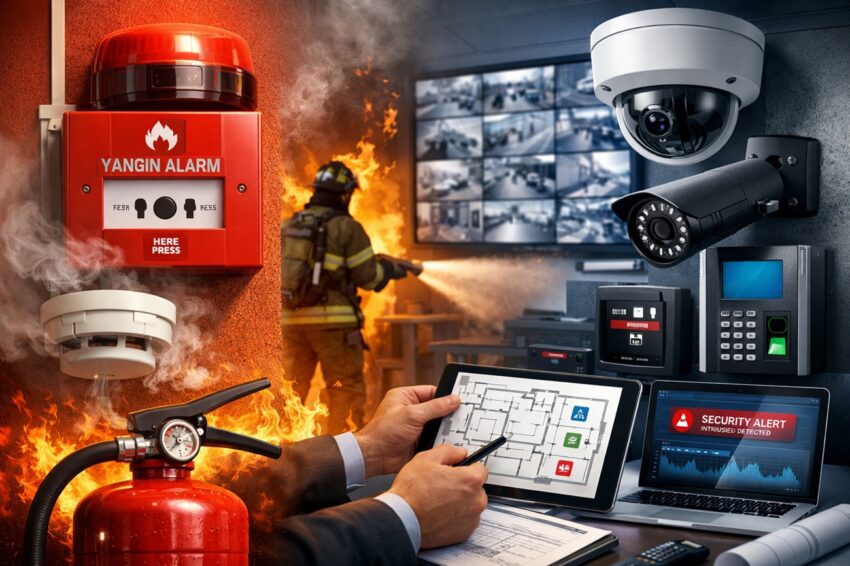
Electronic Security Systems Consulting Services: Benefits and Sector Analysis
Electronic security systems consulting services play a strategic role in ensuring the safety of businesses and institutions. These services aim to establish a comprehensive security infrastructure by planning the effective use of technologies such as CCTV systems, alarm systems, access control, fire detection, and integrated security solutions.
Consultants are involved from the very beginning of a facility or project, providing expert support in critical areas such as risk analysis, system integration, cost optimization, regulatory compliance, and personnel training. In this way, potential security vulnerabilities are identified at an early stage, suitable technologies are selected and integrated, and legal requirements are met.
As a result, security consulting not only raises security standards but also helps businesses save costs in the long term.
Electronic security consultants assess risks through their expert knowledge, integrate the right technologies, and develop institution-specific security strategies. This proactive approach helps prevent security incidents before they occur and reduces financial losses over the long term.

Main Electronic Security Systems
Electronic security systems consist of a combination of components such as CCTV surveillance, burglary and emergency alarm systems, access control systems, and fire detection and alarm systems. When these systems are properly designed and integrated, they complement one another and provide stronger protection. Below is an explanation of the features of each system type and how consulting services enhance their effectiveness.
CCTV Security Camera Systems
CCTV security camera systems are one of the cornerstones of security in terms of both deterrence and incident recording. Cameras placed at strategic points help deter criminal attempts and provide evidence when needed. Indeed, research shows that robbery and theft incidents can decrease by as much as 47% in areas where CCTV security cameras are installed.
In businesses, cameras not only improve security but also support employee productivity and compliance with company policies. For example, one study states that cameras can help reduce theft and vandalism, thereby lowering insurance premiums for businesses. CCTV systems also enable remote monitoring and video analytics, allowing large areas to be supervised with fewer security personnel.
A security consultant maximizes the efficiency of the system by guiding the correct positioning of cameras, eliminating blind spots, and integrating intelligent video analytics. A properly planned CCTV security camera system can reduce crime rates by up to 30% and improve operational efficiency in businesses.
Burglary and Emergency Alarm Systems
Alarm systems are designed to detect unauthorized entry, burglary attempts, or emergency situations such as panic button activation and medical emergencies, and to notify control centers and authorities. The greatest benefits of a burglary alarm system are deterrence and rapid response. Statistics show that 83% of burglars check whether a property has an alarm system before attempting entry, and 60% abandon the target if they see signs of an alarm system.
In other words, installing a burglary alarm system in your business discourages potential criminals from the outset and causes them to move on to other targets. If the alarm is triggered, the response process usually begins within seconds, minimizing the extent of damage.
A consulting service analyzes the facility’s risk profile, places the correct types of sensors such as motion detectors, door/window sensors, and glass-break detectors at appropriate points, and ensures that the alarm system works in integration with the security company or law enforcement authorities.
As a result, false alarm rates are reduced while real threats can be addressed quickly. In addition, consultants ensure that alarm systems comply with relevant insurance and security standards, helping businesses benefit from insurance discounts, as many insurers offer lower premiums to businesses with alarm systems and

Yangın ve Elektronik Güvenlik Sistemleri Danışmanlığı
Access Control Systems
Access control systems are electronic security systems that prevent unauthorized individuals from entering facilities and keep records of entries and exits. They can operate through methods such as card access, biometric scanning (fingerprint, facial recognition), or PIN/password entry. Thanks to these systems, only authorized individuals can access certain areas, thereby reducing internal threats and theft incidents.
At the same time, since entry and exit logs are recorded, monitoring and auditing can be carried out when necessary. However, a poorly designed access control system may slow down business operations or create dissatisfaction among employees. At this point, security consulting services ensure that the system is designed in a way that supports operational efficiency.
For example, experts analyze staff entry and exit traffic and install an appropriate number of turnstiles or readers, preventing congestion or queues at building entrances. In addition, consultants coordinate the integration of access control with other security elements, such as CCTV-based facial matching or the automatic unlocking of doors in the event of a fire alarm.
A well-integrated access control system both enhances security and provides protection without disrupting the company’s daily operations. In fact, in large corporate campuses, modern card access and visitor management systems developed based on consultant recommendations have reduced unauthorized entry attempts by 30% and lowered insurance costs.
Fire Detection and Alarm Systems
Fire detection systems are critical security systems that detect signs of fire at the earliest possible stage through smoke, heat, or gas sensors and trigger alarms. They are of vital importance, especially in protecting human life and preventing major financial losses. The installation and regular maintenance of these systems are also legal requirements; failure to comply with regulations may lead to serious sanctions and penalties.
Fire safety consulting analyzes a facility’s fire risks, determines the correct detector types and alarm points, and provides guidance on fire exits and evacuation plans. In this way, in the event of a possible fire, intervention and evacuation can be carried out as quickly as possible without loss of life. This early warning helps businesses prevent major disasters.
For example, following a fire risk analysis conducted at a manufacturing facility, investments were made in upgrading outdated systems and training personnel. As a result, the insurance premium decreased by 15%, generating annual savings of £10,000, and with an investment of £20,000, a potential fire loss of £500,000 was prevented. Fire alarm systems also offer financial benefits: many insurance companies apply more favorable premiums to businesses equipped with effective fire detection and suppression systems.
Security consulting services ensure that the system complies with relevant fire regulations and standards, thereby eliminating the risk of possible legal penalties. At the same time, fire drills and staff training organized by consultants enable employees to respond correctly in an emergency, increasing life safety while also protecting business continuity.
Integrated Security Solutions
Integrated security solutions refer to the connection and coordinated operation of different electronic security systems on a single central platform. The integration of subsystems such as cameras, alarms, access control, and fire detection enables faster and more coordinated responses to incidents. For example, in an integrated setup, when a fire alarm is triggered, locked doors can automatically open, or when an unauthorized access attempt is detected at a door, the camera in the relevant area can immediately focus on that point and begin recording.
Such scenarios provide much more effective security compared to situations where separate systems operate independently. Integration makes centralized monitoring possible: all systems can be monitored and managed from a single control center, which makes the job of security personnel easier and shortens response times. In addition, integrating systems simplifies maintenance and update processes, as settings and updates can be managed through a single platform.
A security consulting service manages complex integration processes by selecting the interfaces and software that will enable existing systems from different brands to work together harmoniously. Cost optimization is also a major benefit of integration: by integrating existing systems, it is possible to achieve significant cost savings compared to purchasing a new and expensive “fully integrated system.”
In summary, when integrated security solutions are implemented with consulting support, businesses can achieve a higher level of security at lower cost and manage all security processes efficiently from a single point.
In an integrated security management center, CCTV monitoring, access control, and alarm monitoring are combined on a single screen to provide 24/7 surveillance. This centralized approach increases security effectiveness by offering the advantage of immediate response and coordination in the event of incidents.

Elektronik Güvenlik Danışmanlığının Projelerdeki Önemi Nedir?
Key Contributions of Security Consulting Services
The main contributions of obtaining consulting services in electronic security projects can be grouped under several key headings. This section examines in detail the critical components of consulting services, such as risk analysis, system integration, cost optimization, regulatory compliance, and personnel training.
Risk Analysis and Assessment
The security risks faced by each business or facility are different. Security consultants first conduct a comprehensive risk analysis to identify the vulnerabilities, threat levels, and possible scenarios related to the site in question. This analysis takes into account multiple variables, including the physical environment, existing security measures, crime statistics, and the organization’s field of activity.
Based on the findings obtained, consultants develop strategies to reduce or eliminate risks. For example, an additional camera may be recommended to monitor a blind spot identified by the consultant, or two-factor authentication (such as card + biometrics) may be integrated for an area with a high risk of unauthorized access.
Thanks to this proactive approach, precautions are taken before any incident occurs. Preventing potential breaches not only increases security but also protects the organization from financial losses. Indeed, a risk assessment carried out by a consultant can help prevent security breaches and minimize potential losses.
In summary, security risk analysis is the first and most critical step of consulting, providing a comprehensive picture of the institution’s security landscape and determining the effectiveness of all subsequent measures.
System Selection and Integration
Security technologies are developing rapidly, and there is a wide variety of cameras, sensors, software, and other products available on the market. Not every product or solution is suitable for every organization. One important contribution of consulting services is to provide guidance in selecting the systems and products that best suit specific needs. The consultant determines which types of cameras, alarm panels, or access control technologies will be most efficient by taking into account the organization’s budget, risk profile, and growth plans.
For example, wide-angle cameras with night vision may be recommended for a school campus, while high-resolution cameras with facial recognition support may be advised for a bank branch. In addition, consultants ensure the integration of different security components. The joint operation of systems such as cameras, alarms, and access control enables rapid and automatic actions to be taken during security incidents, such as directing the camera to the relevant area when an alarm is triggered.
During the integration phase, consultants’ expertise comes into play in areas such as software interfaces, communication protocols, and data sharing. This makes it possible for multi-brand or different-generation systems to operate in harmony. An integration carried out with professional consulting support enables systems to utilize their full capacity and creates a holistic security structure.
In addition, security consultants supervise installation and perform quality control to ensure that the selected products are installed correctly and that factory settings are optimized for security. This meticulous approach guarantees system performance.
Cost Optimization and Cost-Benefit Analysis
Security investments can become costly if they are not planned properly. Security consulting services help optimize security needs from an economic perspective as well. First of all, thanks to the risk analysis carried out, investments in unnecessary or low-priority areas are avoided, and resources are directed toward the most critical vulnerabilities.
Security consultants ensure effective use of the budget by helping their clients purchase “only the products and systems that are truly necessary.” For example, without consulting support, a business may purchase more cameras or sensors than needed. A consultant, however, prevents such waste and promotes the principle of using only the technology required. Secondly, consulting reduces duplicate spending through integrated solutions.
When an integrated system is established instead of separate systems operating independently, hardware and software components can be shared, and maintenance costs are reduced. The integration of existing systems allows organizations to maximize the value of their current investments instead of purchasing an entirely new and expensive system. Thirdly, consulting services anticipate and calculate long-term savings, presenting decision-makers with a cost-benefit analysis.
For example, the potential cost of a security breach such as stolen goods, business interruption, or reputational damage is compared with the cost of the measures needed to prevent it. In many cases, even a single major security incident can cause losses far exceeding the cost of consulting and system installation. One study reported that organizations receiving professional security consulting achieved a 32% reduction in data breach costs.
Similarly, in the field of physical security, preventive measures recommended by consultants help avoid workplace violence, theft, or vandalism, resulting in significant financial savings for each prevented incident. Consultants also provide guidance regarding insurance advantages, noting that businesses with strong security measures may benefit from lower insurance premiums.
In light of all these factors, consulting creates a roadmap to ensure that the security budget delivers the highest possible return, establishing the understanding that security is not a cost center but rather an investment that generates long-term value.


Education Sector (Schools and Universities)
Schools, campuses, and other educational institutions are environments that must ensure the safety of young individuals while also remaining open and welcoming. In recent years, the need for security in schools has unfortunately become more prominent due to increasing incidents. Electronic security consulting involves designing comprehensive security solutions specifically for schools.
A school security system includes CCTV surveillance, emergency alarm systems (such as panic buttons or silent alarms), access control, and emergency announcement systems to protect students and staff from threats such as bullying, theft, unauthorized entry, and acts of violence. Consultants examine the school’s physical structure and daily operations and plan solutions such as card-access entry and visitor registration systems at entrances, CCTV cameras in corridors and gardens, and classroom announcement systems for emergencies.
In this way, unauthorized entry by outsiders is prevented, while undesirable behavior within the school can also be monitored. Camera systems have been shown to have a positive effect on school discipline; schools that have implemented smart camera analytics with consulting support have reported reductions in bullying incidents and noticeable declines in student misconduct.
In addition, emergency preparedness is a vital issue for the education sector. Consultants prepare the school community for possible incidents by organizing regular fire drills and developing emergency response plans, such as active threat alarm procedures. Among the benefits of security investments in schools is the reassurance they provide to parents; parents who know their children are in a safe environment feel greater satisfaction with the school. It has even been observed that safer school environments can improve student achievement and participation rates.
From a cost perspective, although schools often operate with limited budgets, consultants can also provide guidance on funding opportunities through government grants or projects, such as school safety programs. As an example, following a security consulting project at a high school, turnstiles and cameras installed at the school entrance completely prevented unauthorized external access, corridor cameras reduced fights and vandalism among students by more than 50%, and a panic alarm system was installed for emergencies. Through regular drills, this system was tested, and it was found that evacuation times could be reduced to under 5 minutes in the event of an incident. The table below presents some concrete examples of benefits for educational institutions:
| Educational Institution Application | Consulting Contributions and Outcomes |
|---|---|
| School Campus Security | Reduction in incidents such as bullying and theft through the integration of CCTV cameras and access control; improved evacuation times through emergency buttons and drills (faster response). |
| University Campus (Open Area) | Lighting, emergency call stations, and cameras across the campus were optimized through consulting. Result: a greater sense of security, a noticeable decline in crime incidents compared to the previous year, and increased student confidence in the campus environment (measured through surveys). |
Healthcare Sector (Hospitals and Healthcare Facilities)
Hospitals, healthcare campuses, and clinics are institutions that operate 24/7, have high human traffic, and carry out critically important life-saving operations. In these institutions, security must be understood not only as the physical protection of patients, visitors, and staff, but also as the safeguarding of valuable assets such as medicines and medical equipment.
In addition, privacy and security must be considered together in the healthcare sector. For example, areas containing servers with patient information or neonatal units require special protection. For a hospital, security consultants first identify high-risk areas such as emergency department entrances, intensive care units, pharmacies and storage areas, and psychiatric wards, where both internal threats and external attempts may occur, and recommend appropriate solutions for these locations.
For example, to prevent baby abduction incidents seen in many hospitals, consultants integrate RFID-tagged electronic wristband systems into neonatal wards. With this system, if a baby is removed from the ward without authorization, an automatic alarm is triggered and doors are locked. Likewise, when a card access system is implemented in a hospital with consulting support, the system can be integrated into the hospital’s IT infrastructure and linked with staff rotation schedules.
This ensures that only authorized healthcare personnel can enter critical areas such as operating rooms and pharmaceutical storage rooms. Camera systems in hospitals can be used both for security and for operational monitoring, such as observing patients in intensive care. Consultants also provide guidance on compliance with personal data protection laws and patient privacy rules when using video surveillance, helping to establish policies on where cameras may or may not be installed.
In large healthcare campuses, integrated security solutions stand out. A good example is the Adana Integrated Health Campus in Türkiye: in this 1,550-bed mega-campus, a fire alarm system with more than 45,000 detection points, 2,000 IP cameras, and an emergency announcement system with 10,000 speakers were integrated into a single platform. As a result, in any emergency across the hospital, such as a fire, code blue, or code pink, all systems can operate in coordination.
Consulting services played a critical role during the installation process of such a complex structure by ensuring that integration was completed smoothly and that all systems were commissioned in harmony with one another. In the healthcare sector, the return on security investments is often measured by the prevention of errors and adverse events.
For instance, an access control system implemented after a consulting project reduced the rate of missing medication in hospital pharmacy inventory counts by 80%, while metal detectors and security staff training introduced in the emergency department reduced violence against healthcare workers by half compared to the previous year. In addition, through security consulting, hospitals improve their compliance with international accreditation standards, thereby enhancing their reputation and minimizing legal risks.
As a result, electronic security consulting is an investment that strengthens institutional security in healthcare facilities alongside patient safety and supports the uninterrupted delivery of healthcare services.

Commerce and Retail Sector (Stores and Businesses)
Commercial enterprises, especially stores, supermarket chains, shopping malls, and similar businesses operating in the retail sector, are exposed to both external threats such as theft and robbery and internal threats such as employee error or misconduct and inventory theft. One of the most important issues in this sector is inventory loss, also known as “shrink.”
Although these may seem like small percentages, theft and losses in retail can seriously affect profit margins. Security consulting addresses elements such as cameras, electronic article surveillance (EAS) systems, alarms and detectors, and security personnel planning together in order to develop loss prevention strategies for retail environments.
For example, in a retail chain, consultants may design a multilayered security package that includes the strategic placement of security cameras to eliminate blind spots, deterrence through mirrors and warning signs, and the use of plainclothes security personnel. As a result, incidents of customer theft (shoplifting) are seen to decrease significantly.
Research shows that retail chains equipped with CCTV systems supported by remote monitoring can reduce inventory losses by 15% to 25%. In some cases, it has also been reported that central camera monitoring and AI-based analytics in a supermarket chain in the United States reduced in-store theft by as much as 40%.
Security consulting ensures that such technology investments are scaled and implemented correctly. A consultant can examine the store layout and optimize the field of view of security cameras according to the product placement plan, for example by ensuring that high-risk products remain in the clear view of the cameras. In addition, consultants provide guidance on night alarm systems and anti-theft alarm tags such as RFID or magnetic tags, thereby planning security after store closing hours as well.
Common retail issues such as cash register theft and supply-chain-related losses are also addressed through an integrated security approach, for example by placing both cameras and card-access systems at warehouse entrances, or by monitoring cash register transactions through the integration of cameras and POS systems. From a cost-benefit perspective, retail companies that receive security consulting often achieve a quick return on investment through reduced stock losses.
For example, under consultants’ guidance, a retail chain invested 100,000 TL in a next-generation camera and sensor system. However, by the end of the first year, theft-related stock loss had decreased by 20% compared to the previous year, resulting in approximately 150,000 TL worth of goods being retained. In other words, the investment paid for itself in less than a year. The table below summarizes some concrete gains for the commercial sector:
| Retail Security Application | Tangible Benefits Achieved |
|---|---|
| Retail Chain (Shrink Reduction) | After the installation of CCTV cameras and a 24/7 remote monitoring center, inventory losses decreased by 15% to 25%. Theft-related losses were reduced, and discounts on insurance premiums were obtained. |
| Shopping Mall and Supermarket Security | The risk of armed robbery was minimized by installing X-ray devices and metal detectors at entrances. Emergency response became faster through security personnel training, and the sense of safety among customers and employees increased. |
Public Sector (Public Buildings and Spaces)
Public spaces, government buildings, and infrastructure facilities such as airports, power plants, and city squares are perhaps among the broadest application areas of security consulting. This sector requires specialized expertise in terms of public safety and the protection of critical infrastructure. In public security projects, consultants generally focus on integration and scale; issues such as city surveillance systems (public CCTV cameras), emergency warning systems, and perimeter security for critical facilities must be planned under a single framework.
For example, a system consisting of hundreds of cameras installed in a city can, with the help of consulting, be connected to a central monitoring center jointly used by police and municipal units. Such a citywide CCTV network can significantly reduce crime rates through proper camera placement and real-time monitoring. One study found that theft and robbery incidents in areas with public cameras were reduced by nearly half, up to 47%.
In this type of project, consultants manage technical details such as camera field-of-view analysis, lighting improvements, and the installation of mobile monitoring centers. In public buildings, such as ministry offices and municipal facilities, solutions such as visitor management systems, biometric access to high-security areas, and X-ray scanners are commonly used. Consulting services also cover the effective placement of these devices and the training of personnel.
Particularly in response to terrorist threats, integration and intelligence sharing become increasingly important in public spaces. Consultants develop protocols that integrate electronic security systems with emergency response centers and law enforcement units. For example, solutions such as smart cameras in a metro station that detect an unattended package and immediately send an alarm to security authorities are implemented through consulting services.
From a cost-benefit perspective, the returns of public safety projects are often difficult to quantify, as they include outcomes such as the prevention of loss of life and an increased sense of public safety, which are invaluable. However, numerically speaking, in a project involving the installation of hundreds of CCTV cameras in central London, consultants targeted areas with high crime rates and optimized camera placement, after which crime rates in those areas reportedly fell by more than 30%.
The financial value of this reduction was seen indirectly through lower policing and judicial costs, reduced municipal spending related to vandalism, and increased economic vitality in the area. In addition, consulting in public sector projects ensures regulatory compliance, such as compliance with personal data protection laws and city surveillance regulations, thereby also protecting public institutions from a legal standpoint.
As a result, electronic security consulting is a strategic investment in the public sector. It makes cities safer, ensures preparedness against possible disaster scenarios, and fosters public trust.


