



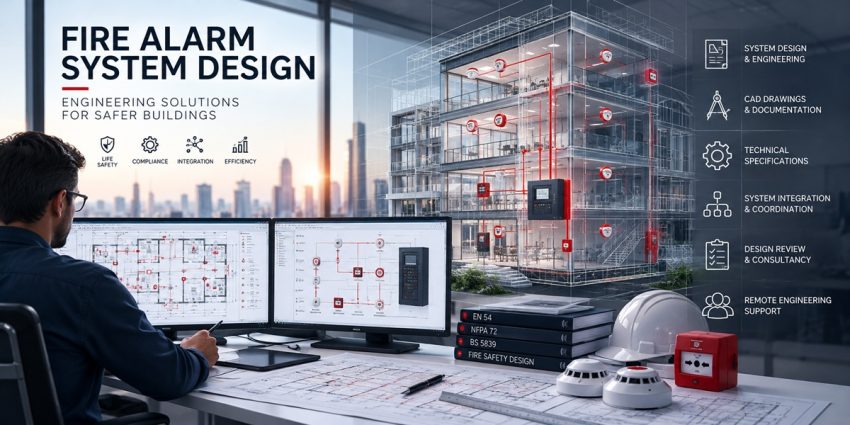
Fire Alarm System Design: Engineering Approach, Technical Drawings and Project Support
Proper fire detection and alarm system design is essential for life safety, business continuity, compliance with applicable technical standards, and effective management of project costs.
A successful fire alarm system project involves much more than positioning detectors on architectural drawings. It requires fire risk assessment, selection of appropriate detection technologies, development of system architecture, coordination with other building systems, and preparation of comprehensive engineering documentation.
Fire alarm system design is the engineering process of defining fire detection, notification, and control functions based on a building’s characteristics, fire risks, operational requirements, and overall fire safety strategy.

Drawing on professional experience gained since 2005 in fire safety, electronic security systems, engineering design, and project management, this article explores the fundamental engineering considerations involved in fire alarm system design, as well as the technical requirements relevant to engineering consultancies, system integrators, and project teams.
1. Why Is Professional Engineering Support Important in Fire Alarm System Design?
Every building has different architectural characteristics, occupancy requirements, fire risks, and operational conditions. Therefore, applying a standard device layout approach to every project may not provide an appropriate or effective solution.
For example, the fire detection and alarm requirements of a hospital may differ significantly from those of an industrial facility, commercial office building, or data centre.
Inadequate design decisions can lead to several technical and operational problems:
- Unwanted alarms caused by inappropriate detector selection
- Insufficient or incorrectly designed detection coverage
- Coordination deficiencies between fire alarm systems and other building services
- Installation conflicts between electrical, mechanical, and architectural disciplines
- Project revisions and additional installation costs
- Technical difficulties during commissioning, testing, and system acceptance
Reducing these risks requires a systematic engineering approach from the early stages of the project.
The primary objective of professional fire alarm engineering is not simply to develop a functioning system, but to create a reliable, maintainable, and technically appropriate solution that meets the building’s fire safety and operational requirements.
 2. Fire Risk Assessment and Detection Strategy
 2. Fire Risk Assessment and Detection Strategy
The starting point of fire alarm system design is a thorough evaluation of the building’s characteristics and associated fire risks.
This assessment should consider:
- Building occupancy and intended use
- Architectural layout and structural characteristics
- Fire loads and potential ignition sources
- Occupant characteristics and evacuation arrangements
- Environmental and operational conditions
- Existing fire protection measures
- Applicable fire safety regulations and technical standards
During the design process, several fundamental questions should be addressed:
- What are the fire risks associated with each protected area?
- Which potential fire scenarios should be considered?
- Which detection technologies are appropriate for the identified risks?
- What notification and control functions are required following fire detection?
- How should the detection system support the building’s overall fire safety strategy?
The answers establish the foundation for selecting suitable detection technologies and developing the system architecture.
In large or technically complex buildings, the fire detection strategy should be developed in coordination with architectural, mechanical, and electrical engineering teams.
A coordinated approach helps ensure that fire detection requirements are integrated into the overall building design rather than treated as an isolated system.
3. Detector Selection and Fire Alarm System Layout Design
Detector selection is one of the most important technical decisions in fire alarm engineering.
Smoke detectors, heat detectors, multi-sensor detectors, flame detectors, and specialised detection solutions have different operating principles and application characteristics.
The appropriate technology depends on the expected fire characteristics, environmental conditions, operational requirements, and applicable design standards.
For example, high-ceiling areas, spaces with significant air movement, dusty industrial environments, and specialised equipment rooms may require different detection strategies.
Selecting a detection technology solely on the basis of its sensitivity may lead to unwanted alarms or inadequate performance under certain conditions.
The engineering evaluation should therefore consider:
- Expected fire development and detection objectives
- Environmental conditions and potential interference
- Detection performance requirements
- Risk of unwanted alarms
- Accessibility for inspection and maintenance
- Compatibility with the proposed fire alarm system architecture
Effective fire detection design should focus on selecting the appropriate technology and positioning devices correctly, rather than simply increasing the number of detectors.
This approach supports system reliability, operational efficiency, and effective use of project resources.
 4. Fire Alarm System Architecture and Integration
 4. Fire Alarm System Architecture and Integration
Fire alarm system architecture should be developed according to the size, complexity, functional organisation, and fire safety requirements of the building.
Key design considerations include:
- Fire alarm control panel locations
- Detection zones and system loops
- Addressable device organisation
- Power supply arrangements
- Cable routing and electrical infrastructure
- System capacity and expansion requirements
- Fault monitoring and system reliability
- Maintenance and operational accessibility
Modern fire alarm systems often interact with other building services and safety systems.
These may include:
- Smoke control and ventilation systems
- Building Management Systems (BMS)
- Access control systems
- Lift control systems
- Fire suppression systems
- Emergency warning and evacuation systems
Integration should be based on the approved fire safety strategy and clearly documented interface requirements.
Cause and Effect Matrix in Fire Alarm Engineering
A Cause and Effect Matrix is an essential engineering document used to define how a fire alarm system and associated building systems should respond to specified events.
It identifies the relationship between initiating conditions and the required notification or control actions.
For example, a fire alarm originating from a particular detection zone may initiate specific smoke control functions, access control responses, or other building safety operations, depending on the approved fire strategy.
The matrix supports:
- Coordination between engineering disciplines
- Definition of system interfaces
- Development of control sequences
- System configuration and programming
- Functional testing and commissioning
- Verification of required fire safety responses
Insufficiently defined system interfaces can create coordination problems during installation and commissioning.
In projects involving multiple contractors or specialist system suppliers, interface responsibilities and control sequences should be established during the engineering design stage.
5. What Technical Documents Are Required for a Fire Alarm System Project?
The quality and completeness of engineering documentation play a significant role in the successful implementation of fire detection and alarm projects.
For engineering consultancies, system integrators, and project contractors, clearly prepared technical documents help communicate design requirements and support effective coordination.
Depending on the project scope, typical engineering deliverables may include:
| Engineering Deliverable | Purpose |
|---|---|
| Fire alarm system layout drawings | Define the location and arrangement of detection and alarm devices |
| System architecture and block diagrams | Illustrate the overall system configuration and interfaces |
| Loop and zoning documentation | Define detection zones, loops, and system organisation |
| Cable routing and connection details | Support the design of electrical infrastructure and connections |
| Device schedules and technical specifications | Establish equipment requirements and system characteristics |
| Cause and Effect Matrix | Define fire alarm sequences and associated control functions |
| Engineering calculations | Evaluate applicable system capacity and technical requirements |
| Design coordination documentation | Support communication between engineering disciplines |
Engineering drawings and related documentation should be prepared according to the relevant design stage, project specifications, and contractual deliverable requirements.
Outsourced Fire Alarm Engineering and Technical Project Support
Engineering consultancies and system integration companies may require additional technical design and documentation capacity, particularly during periods of high project workload.
When sufficient project information is available and the scope of work is clearly defined, selected engineering design and technical documentation activities can be carried out remotely.
Potential areas of collaboration include:
- Review and development of existing fire alarm drawings
- Preparation of fire detection and alarm system layouts
- Development of system architecture and block diagrams
- Engineering documentation and drawing coordination
- Review of technical specifications and equipment schedules
- Support for system interface and integration documentation
- Preparation and review of project-specific technical deliverables
Remote engineering activities should be organised according to the client’s project requirements, applicable regulations, and the responsibilities of the designated engineering team.
If your engineering consultancy, design office, or system integration company requires project-based fire alarm engineering support, I welcome opportunities to discuss technical collaboration and project requirements.
 6. Compliance with Technical Standards and Engineering Design Review
 6. Compliance with Technical Standards and Engineering Design Review
Fire detection and alarm system design must comply with the applicable regulations, technical standards, and project-specific requirements in the country where the system will be installed.
Commonly referenced standards and regulatory documents include:
| Standard or Regulation | General Scope |
|---|---|
| EN 54 Series | Product and performance requirements for fire detection and alarm system components |
| CEN/TS 54-14 | Guidance on planning, design, installation, commissioning, use, and maintenance of fire detection and alarm systems |
| BS 5839-1 | Code of practice for fire detection and alarm systems in non-domestic premises in the United Kingdom |
| NFPA 72 | National Fire Alarm and Signaling Code, covering fire alarm, signalling, and emergency communications systems |
| Turkish Regulation on Fire Protection of Buildings | Fire safety requirements applicable to buildings in Türkiye |
The applicability of these documents depends on local legislation, building classification, contractual specifications, the adopted edition of the relevant standard, and approval requirements.
International projects may involve different regulatory frameworks and engineering responsibilities.
Consequently, a structured design review should consider both technical compliance and the specific requirements of the project.
Technical Review of Existing Fire Alarm System Designs
Engineering design review is relevant not only to new projects but also to the evaluation of existing fire alarm system documentation.
Depending on the agreed scope, a technical review may address:
- Detector selection and layout arrangements
- System architecture and equipment organisation
- Detection zoning and loop configuration
- System interface definitions
- Cause-and-effect relationships
- Technical documentation consistency
- Identifiable coordination issues
- Applicable technical requirements
Such reviews can help identify design deficiencies, inconsistencies, or unresolved interface requirements before installation.
The extent of the assessment depends on the completeness of the available project documentation and the specific technical requirements involved.
7. Installation Coordination, Testing and Commissioning
Fire alarm system design, installation, testing, and commissioning are closely related stages of the project lifecycle.
Incomplete or inconsistent engineering documentation may result in different interpretations by installation teams, increased design revisions, and unexpected technical difficulties during commissioning.
Effective project coordination requires consistency between:
- System architecture documents
- Technical specifications
- Fire alarm layout drawings
- Interface diagrams
- Cause and Effect Matrix
- Electrical and mechanical system requirements
- Approved fire safety strategies
During commissioning, system functions, alarm sequences, and interfaces should be tested against the defined requirements.
Early engineering review and systematic coordination can contribute to more controlled installation, testing, and acceptance processes.
Technical documentation should also support future inspection, maintenance, and system modifications throughout the operational life of the building.
Engineering Services and Technical Support for Consultancies, Contractors and System Integrators
Project-based engineering collaboration can provide additional technical resources for organisations involved in fire detection, electronic security, and building systems.
Depending on the project requirements and agreed responsibilities, potential technical support areas include the following.
Fire Alarm System Design and Engineering
Development of fire detection and alarm system layouts, system architecture, and associated technical design documentation.
CAD Drawings and Technical Documentation
Preparation and development of engineering drawings, system diagrams, equipment documentation, and project coordination deliverables.
Technical Specifications and Design Review
Support for defining equipment requirements, reviewing proposed system solutions, and evaluating technical documentation.
System Integration and Engineering Coordination
Review and coordination of fire alarm system interfaces with associated building services, including control sequences and cause-and-effect requirements.
Fire Safety Assessment and Technical Consultancy
Project-specific fire safety evaluations, risk-related technical assessments, and engineering consultancy support within the agreed scope of work.
Each collaboration should begin with a clear definition of the engineering responsibilities, applicable standards, required deliverables, and project schedule.
Where local regulations require professional registration, statutory approval, certification, or engineering sign-off, these responsibilities must remain with appropriately authorised professionals.
Frequently Asked Questions About Fire Alarm System Design
 Frequently Asked Questions About Fire Alarm System Design
How is a fire alarm system designed?
Fire alarm system design involves evaluating building characteristics and fire risks, defining the detection strategy, selecting appropriate devices, developing system architecture, establishing fire alarm control sequences, and preparing technical engineering documentation.
The design should be reviewed against applicable regulations, technical standards, and the project’s fire safety requirements.
Can fire alarm system design and engineering drawings be prepared remotely?
Yes. When sufficient architectural drawings, technical information, and project requirements are available, selected activities such as fire alarm layout development, system diagrams, design coordination, and technical documentation can be completed remotely.
However, site surveys, local approval procedures, statutory engineering responsibilities, and required inspections must be considered separately.
Can engineering consultancies outsource fire alarm design and documentation work?
Yes. Engineering consultancies and system integration companies can engage external engineering resources for defined design and documentation activities, subject to contractual arrangements, technical responsibilities, and applicable professional requirements.
This approach may be useful for teams experiencing high project workloads or requiring additional specialist engineering capacity.
Can an existing fire alarm system design be technically reviewed?
Yes. Existing engineering documentation can be reviewed to assess system architecture, detector layouts, interfaces, fire alarm sequences, and documentation consistency.
The scope and reliability of the assessment depend on the availability and quality of the technical information provided.
What information is required to request a fire alarm engineering quotation?
To support an initial technical assessment and project quotation, it is useful to provide:
- Project location and building type
- Approximate building size and project scope
- Architectural drawings, where available
- Required engineering services
- Applicable design standards
- Existing technical documentation
- Current project stage
- Expected deliverables and target completion date
This information helps define the scope of engineering work and determine the documentation required for the project.
Conclusion: Effective Fire Alarm Design Requires an Integrated Engineering Approach
Fire detection and alarm system design is a multidisciplinary engineering process requiring technical knowledge, systematic analysis, accurate documentation, and effective coordination.
Successful design depends not only on selecting appropriate equipment but also on evaluating fire risks, defining system architecture, coordinating interfaces, and establishing clear technical requirements.
For large-scale and multidisciplinary projects, engineering involvement during the early design stages can help reduce technical uncertainties, improve design coordination, and support effective implementation.
A well-engineered fire alarm system is the result of appropriate technical decisions, coordinated design documentation, and a clear understanding of the building’s fire safety requirements.
Looking for Fire Alarm Engineering Design or Technical Project Support?
I have been professionally involved in fire safety, electronic security systems, engineering design, risk assessment, technical documentation, and project management since 2005.
My professional background includes engineering design, technical evaluation, project coordination, system integration, and technical consultancy across different project environments.
I am open to project-based collaboration with international engineering consultancies, fire safety specialists, MEP design offices, system integrators, and project contractors.
Areas for Potential Engineering Collaboration
- Fire detection and alarm system design
- Engineering drawings and technical documentation
- Fire alarm system architecture and integration coordination
- Technical specifications and design reviews
- Fire safety assessment and technical consultancy
- Remote engineering design and documentation support
Let’s Discuss Your Engineering Project
If your company requires engineering design, technical documentation, or project-based technical support, I welcome the opportunity to discuss your requirements.
For an initial project discussion, please share:
- Project type and location
- Required engineering services
- Applicable technical standards
- Current project stage
- Expected deliverables
- Target delivery schedule
Contact me to discuss your project requirements and potential engineering collaboration.
I am open to remote project-based engineering assignments, international technical partnerships, and relevant professional engineering opportunities.
Technical References
- CEN/TS 54-14:2018 — Fire Detection and Fire Alarm Systems: Guidelines for Planning, Design, Installation, Commissioning, Use and Maintenance
European technical guidance - BS 5839-1:2025 — Fire Detection and Fire Alarm Systems for Buildings: Code of Practice for Design, Installation, Commissioning and Maintenance of Systems in Non-Domestic Premises
British Standards information - NFPA 72 — National Fire Alarm and Signaling Code
NFPA Codes and Standards
Disclaimer: This article is intended for general technical and engineering information. Project-specific system design, regulatory compliance, verification, and approval responsibilities must be evaluated in accordance with applicable standards, local regulations, and the requirements of the relevant authorities and appropriately authorised professionals.


